
What happens at a checkup
- Cleaning with our hygienist to remove plaque and tartar, then a polish
- Exam with the dentist to check teeth, gums, bite and existing work
- Oral cancer screening at every exam
- Digital X-rays when they're due, with far less radiation than film
- Personal advice on brushing, flossing and products that suit your mouth
Most people come every six months. If you've had gum disease, every three to four months usually works better.
Cleanings for children
We see kids and teens for cleanings and checkups, with a gentle approach that helps them feel comfortable at the dentist. We'll check how their teeth are developing and recommend fluoride or other preventive care when it helps.
Gum disease treatment
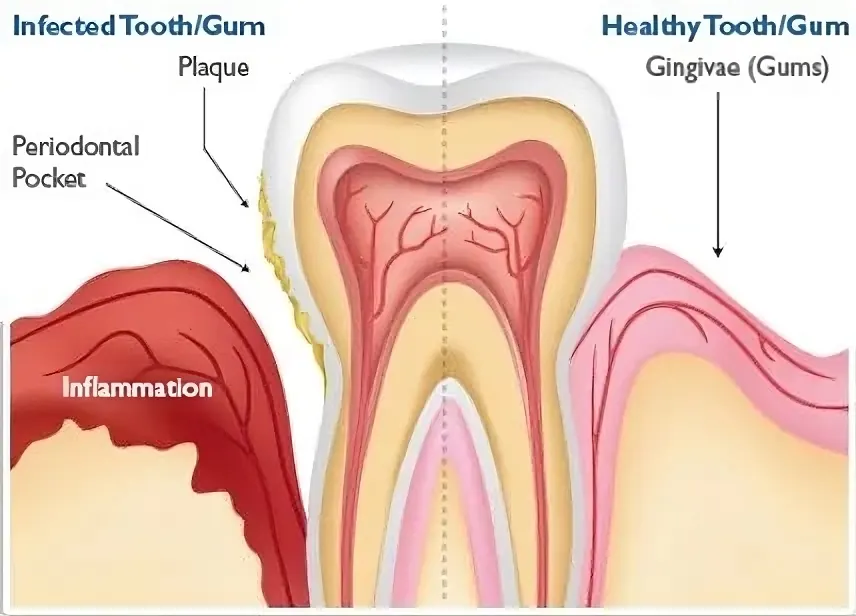
Bleeding gums, bad breath, sensitivity and gums that are pulling back are common signs of periodontal disease. It's usually painless in the early stages, which is why regular exams matter.
- Scaling and root planing (deep cleaning): removes buildup below the gumline and smooths the roots so the gums can heal and reattach.
- Periodontal maintenance: more frequent cleanings to keep gum disease under control.
- Advanced care: for deep pockets, receding gums or bone loss, our visiting periodontist, Dr. Hourizadeh, provides gum surgery and grafting right here in the office. About periodontics and gum surgery
Why it matters
Gum disease is the leading cause of tooth loss in adults, and gum health is linked to overall health, including heart disease and diabetes. Dr. Hu puts particular emphasis on prevention and on helping you keep your teeth healthy at home.
No insurance?
Our in-office membership plan covers your preventive visits and gives you savings on other treatment. See insurance and membership
Patients visit us from Port Washington, Manhasset and Great Neck, and from across Long Island and Queens.
After your visit
Home-care instructions: Deep cleaning aftercare. All post-op instructions
Common questions
Do you see children?
Yes, our hygiene team sees patients of all ages.
Why do my gums bleed when I floss?
Bleeding is usually a sign of inflammation from plaque along the gumline. It often improves with a cleaning and consistent flossing. If it doesn't, we'll check for gum disease.
What's the difference between a regular cleaning and a deep cleaning?
A regular cleaning removes plaque and tartar above and just below the gumline. A deep cleaning goes further below the gums to treat gum disease, and the area is usually numbed for comfort.
How often should I get my teeth cleaned?
Most people do well every six months. Patients with gum disease often need cleanings every three to four months.
Does insurance cover cleanings?
Most dental plans cover two cleanings and exams a year, often in full. We'll check your benefits.
Other services
Book online, any time
Booking online for the first time? Choose “I am a new patient,” even if you've visited us before. If you've booked online with us before, just sign in.
Prefer to talk? Call (516) 430-7730.